
Operating expenses can be classified and presented by nature or function, or using a ‘mixed’ presentation. The objective is to provide the most useful structured summary in the statement of profit or loss (IFRS 18.78).
Let’s dive in.
Choosing the presentation method
When choosing the presentation method, an entity considers several factors, including which line items provide the most useful information about the main components or drivers of its profitability. For example, cost of sales is a key driver of profitability for a retailer and helps investors assess whether, and by what margin, revenue from the sale of goods covers what are typically the retailer’s direct costs. However, cost of sales won’t provide useful information for most service entities, where the relationship between revenue and costs is less direct.
Another consideration is which line items best reflect how the business is managed and how management reports internally. Industry practice is also relevant: if entities within an industry classify expenses consistently, investors can more readily compare expenses across entities in that industry.
Nevertheless, if allocating particular expenses to functions would be arbitrary to the extent that the resulting line items would not faithfully represent those functions, the entity must classify those expenses by nature (IFRS 18.B80).
The classification and presentation of expenses should be consistent from one reporting period to the next (IFRS 18.B83). Expenses must, of course, be aggregated to achieve the objective of providing a useful structured summary (IFRS 18.B85).
--Too many IFRS updates? I know the feeling! That's why I created Reporting Period. It's a concise monthly summary of IFRS developments and Big 4 insights for accounting professionals. It's completely free, with zero spam, and you can unsubscribe anytime with one click. Interested? Leave your email below:
Presentation by nature
Presentation by nature provides information about operating expenses based on the nature of the economic resources consumed in carrying out operations, without reference to the activities for which those resources were consumed. Typical examples of expenses classified by nature include raw materials, employee benefits, and depreciation and amortisation (IFRS 18.80).
The amounts presented for expenses classified by nature may not equal the amounts recognised as expenses in the same period because they may include amounts capitalised in the carrying amount of inventory or PP&E. Accordingly, entities adopting presentation by nature include an additional line item reflecting the change in the carrying amount of the related assets, for example, changes in inventories of finished goods and work in progress (IFRS 18.B84(a)).
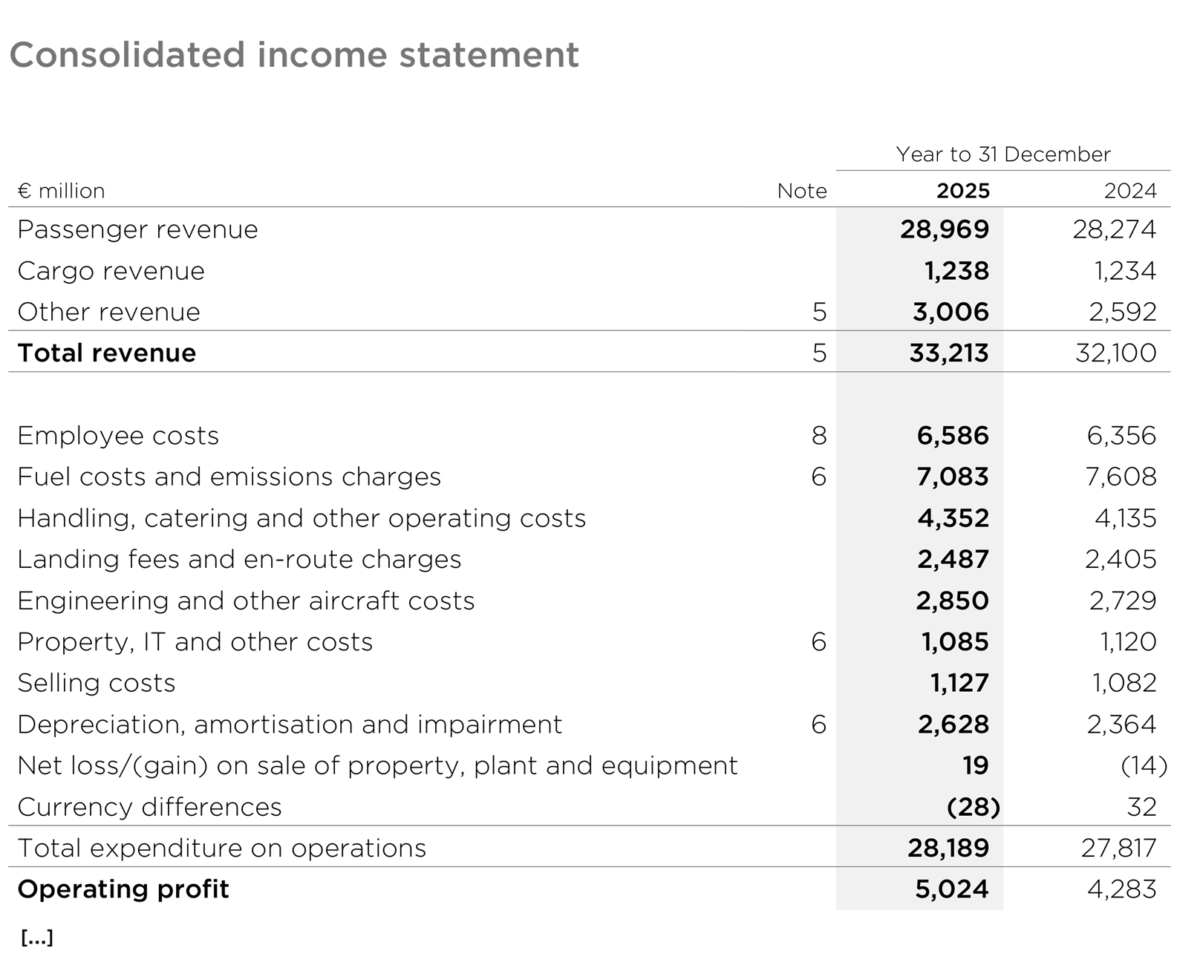
Below is an example of expenses classified by nature by International Consolidated Airlines Group, although the financial statements were prepared under IAS 1:
Presentation by function
When classifying expenses by function, an entity allocates and aggregates operating expenses according to the activity to which the consumed resource relates. For example, cost of sales combines expenses relating to production or other revenue-generating activities, such as raw materials, employee benefits, depreciation and amortisation. As a result, resources of the same nature will be allocated across several functional line items. For example, employee benefits may be allocated between cost of sales, administrative expenses, and selling expenses (IFRS 18.81).
In this context, the IASB considered defining ‘functions’ in IFRS 18. However, the board ultimately decided against doing so because it considered the concept to be well established and widely understood. It also acknowledged the difficulty of developing an appropriate definition and related guidance (IFRS 18.BC253).
If an entity presents at least one expense line item classified by function within the operating category, it must present a separate line item for cost of sales, unless it does not identify a cost of sales function (IFRS 18.82).
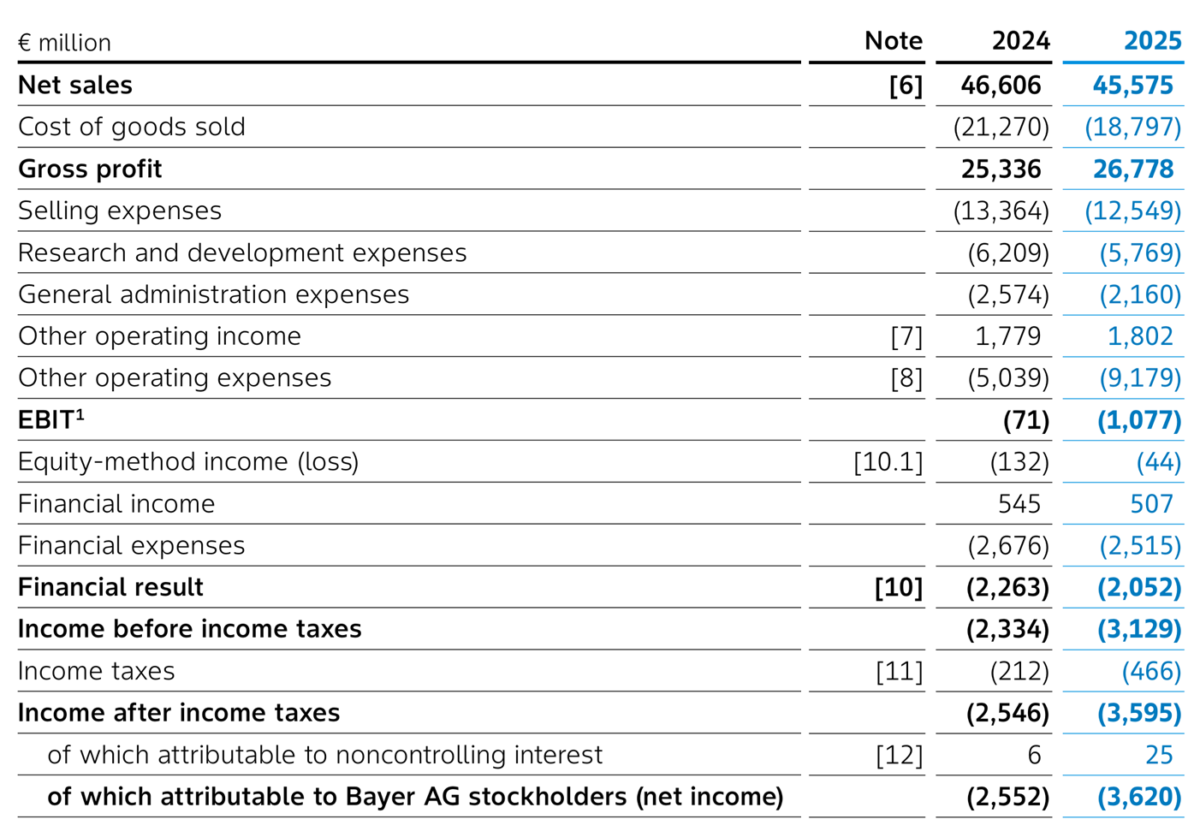
Below is an example of a P/L statement with expenses classified by function from Bayer, although the financial statements were prepared under IAS 1:
Mixed presentation
IFRS 18.B81 allows a ‘mixed’ presentation of operating expenses if an entity concludes that this is the best way to achieve the most useful structured summary of the P/L statement. This may be the case, for example, when the factors in IFRS 18.B80(a)-(b) support classification by function, except for particular expenses for which allocation to functions would be arbitrary and therefore prohibited under IFRS 18.B80(d). Alternatively, an entity with two distinct main business activities may present certain expenses by function and others by nature if doing so provides meaningful information about the primary drivers of profitability.
The IFRS Interpretations Committee considered whether a mixed presentation should be used only as a last resort or in very rare circumstances. The Committee’s answer was a resounding no: a mixed presentation should be used when doing so provides the most useful structured summary of the entity’s operating expenses.
Entities applying a mixed presentation must label the resulting line items in a way that clearly identifies the expenses included in each line item. For example, if an entity includes some employee benefits within a functional line item and other employee benefits within a line item classified by nature, the label for the latter should clarify that it excludes amounts included in functional line items, for example, “employee benefits excluding amounts included in cost of sales”. Nevertheless, each individual line item must include expenses aggregated either by nature or by function, but not both (IFRS 18.79, B81-B82).
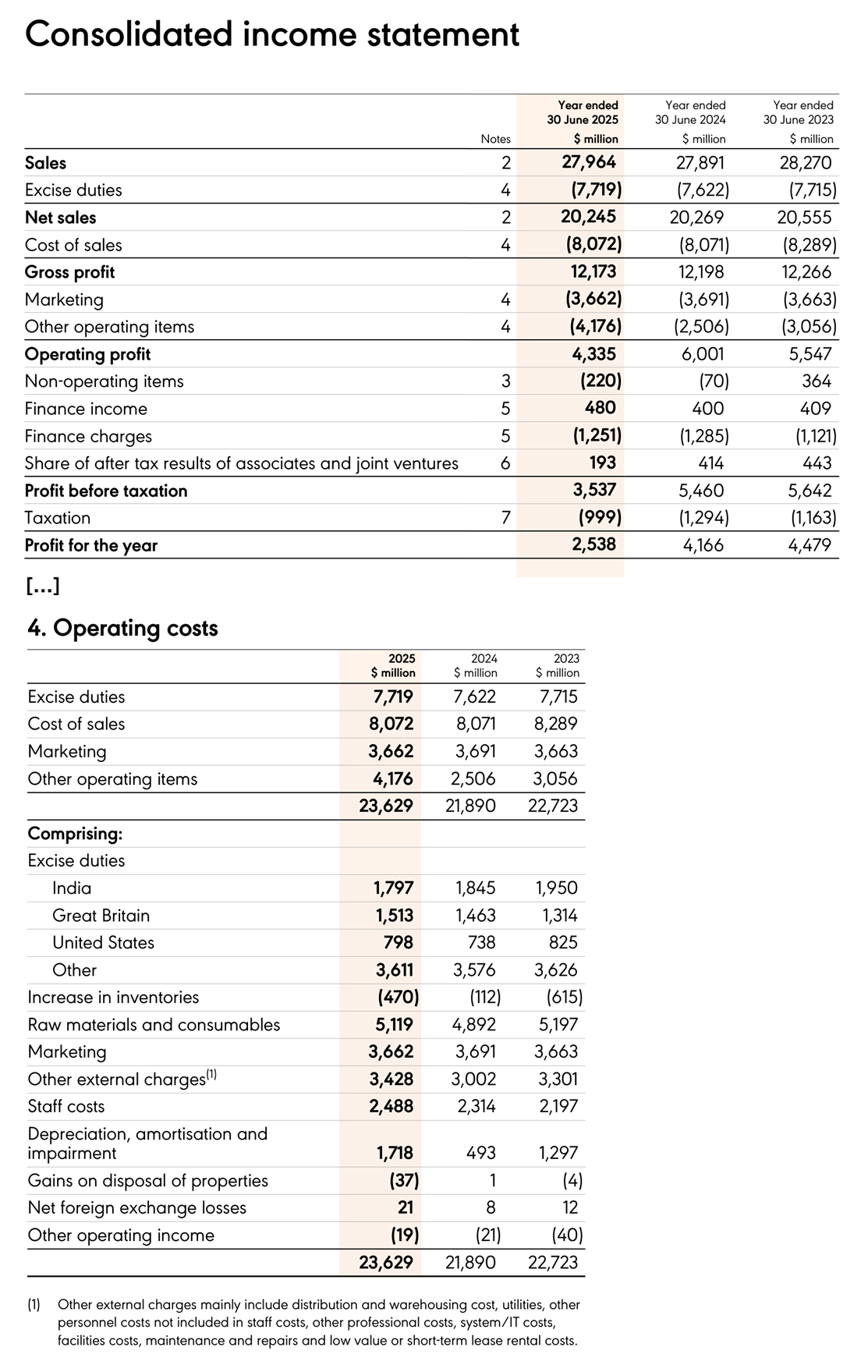
Below is an example of a P/L statement using a mixed presentation from Diageo plc, although the financial statements were prepared under IAS 1:
Disclosure of specified expenses by nature
An entity that presents, either voluntarily or because of an explicit requirement in IFRS 18, at least one line item comprising expenses classified by function within the operating category must disclose, in a single note, the total amount of each of the following (IFRS 18.83(a)):
- depreciation, comprising the amounts required to be disclosed by IAS 16.73(e)(vii), IAS 40.79(d)(iv) and IFRS 16.53(a);
- amortisation, comprising the amount required to be disclosed by IAS 38.118(e)(vi);
- employee benefits, comprising the amount for employee benefits recognised under IAS 19 and the amount for services received from employees recognised under IFRS 2;
- impairment losses and reversals of impairment losses, comprising the amounts required to be disclosed by IAS 36.126(a)-(b); and
- write-downs and reversals of write-downs of inventories, comprising the amounts required to be disclosed by IAS 2.36(e)-(f).
Moreover, for each total of the expenses by nature listed above, entities must disclose the amount relating to each line item in the operating category, together with a list of any line items outside the operating category that also include amounts relating to that total (IFRS 18.83(b)). Finally, because the disclosed totals for expenses by nature may include amounts capitalised as part of the carrying amount of inventory or PP&E, entities must provide a qualitative explanation of this fact and identify the assets involved (IFRS 18.B84(b)).
IFRS 18 provides an exemption from the general principles of aggregation and disaggregation for this disclosure, so entities aren’t required to provide further disaggregation beyond the five categories listed above (IFRS 18.84-85).
The IASB explained the underlying rationale for this disclosure requirement in Basis for Conclusions paragraph IFRS 18.BC260. The board considered that presenting operating expenses by function provides useful information, but also aggregates expense items that respond differently to economic changes. This makes future operating expenses more difficult to forecast. Furthermore, information about the nature of expenses helps users understand the relationship between operating expenses and the related cash flows.
Note 1—Specified expenses by nature included within Illustrative Examples to IFRS 18 illustrates what this disclosure could look like. I’ll provide actual examples once companies start publishing financial statements under IFRS 18.
More about IFRS 18
See other pages relating to IFRS 18:
Overview of IFRS 18Statement of Profit or Loss
Categories in the Statement of Profit or Loss
Specified Main Business Activities
Presentation and Disclosure of Operating Expenses
Cost of Sales
Other Comprehensive Income
Statement of Financial Position
Classification of Assets and Liabilities as Current and Non-current
Statement of Changes in Equity
Consistency of Presentation, Disclosure and Classification
Aggregation and Disaggregation in Financial Statements
Offsetting in Financial Statements
Transactions with Owners in Their Capacity as Owners
Identification of Management-Defined Performance Measures
Presentation and Disclosure of Management-Defined Performance Measures
Transition from IAS 1