
The statement of financial position (SoFP) is a primary financial statement that provides a snapshot of an entity’s assets, liabilities and equity at the reporting date.
Let’s dive in.
Required line items
Paragraphs IFRS 18.103-104 specify line items that should be presented in the statement of financial position, such as PP&E, intangible assets or goodwill. However, the presentation of these required line items should be considered in the context of the role of the primary financial statements.
In essence, presenting a specified line item isn’t required if it’s unnecessary to provide a useful structured summary of assets, liabilities and equity. Nevertheless, the entity should consider disclosing an omitted item in the notes unless it’s immaterial.
Apart from the current/non-current classification, IFRS 18 does not prescribe the order or format in which an entity presents items in the statement of financial position. In addition, the descriptions used, the ordering of items and their aggregation may be amended to reflect the nature of the entity’s operations (IFRS 18.106).
--Too many IFRS updates? I know the feeling! That's why I created Reporting Period. It's a concise monthly summary of IFRS developments and Big 4 insights for accounting professionals. It's completely free, with zero spam, and you can unsubscribe anytime with one click. Interested? Leave your email below:
Additional line items
Paragraphs IFRS 18.B109-B111 provide guidance on the judgement required to determine whether additional line items should be presented to provide a useful structured summary of assets, liabilities and equity in the statement of financial position.
Share capital and reserves
IFRS 18.130(a) specifies information about share capital that should be:
- presented in the statement of financial position, or
- presented in the statement of changes in equity, or
- disclosed in the notes.
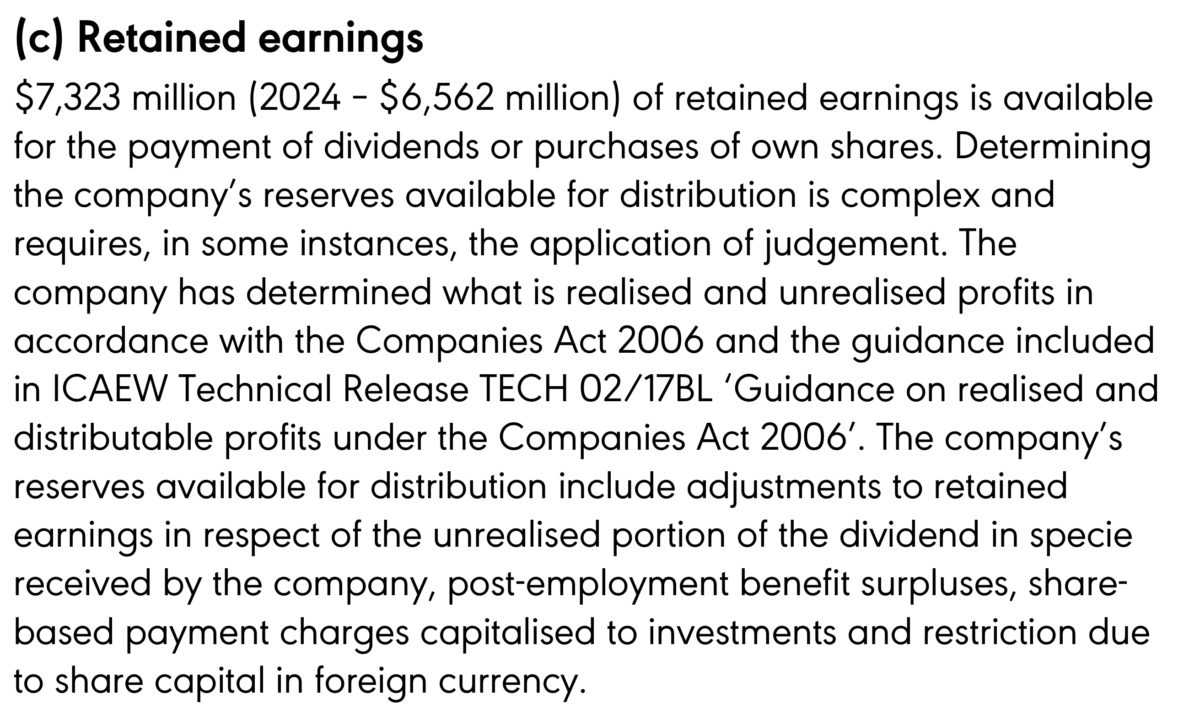
The required information begins with the number of shares and extends to details such as “rights, preferences and restrictions attaching to each class of share capital, including restrictions on the distribution of dividends and the repayment of capital.” While these kinds of restrictions are common in most legal jurisdictions, for example because not all retained earnings can be distributed as dividends, many companies fail to disclose them.
UK-listed companies provide a good example of these disclosures, particularly those relating to restrictions on dividend payments under UK company law, as summarised in the ICAEW paper. Below is an example of such a disclosure from Diageo’s financial statements:
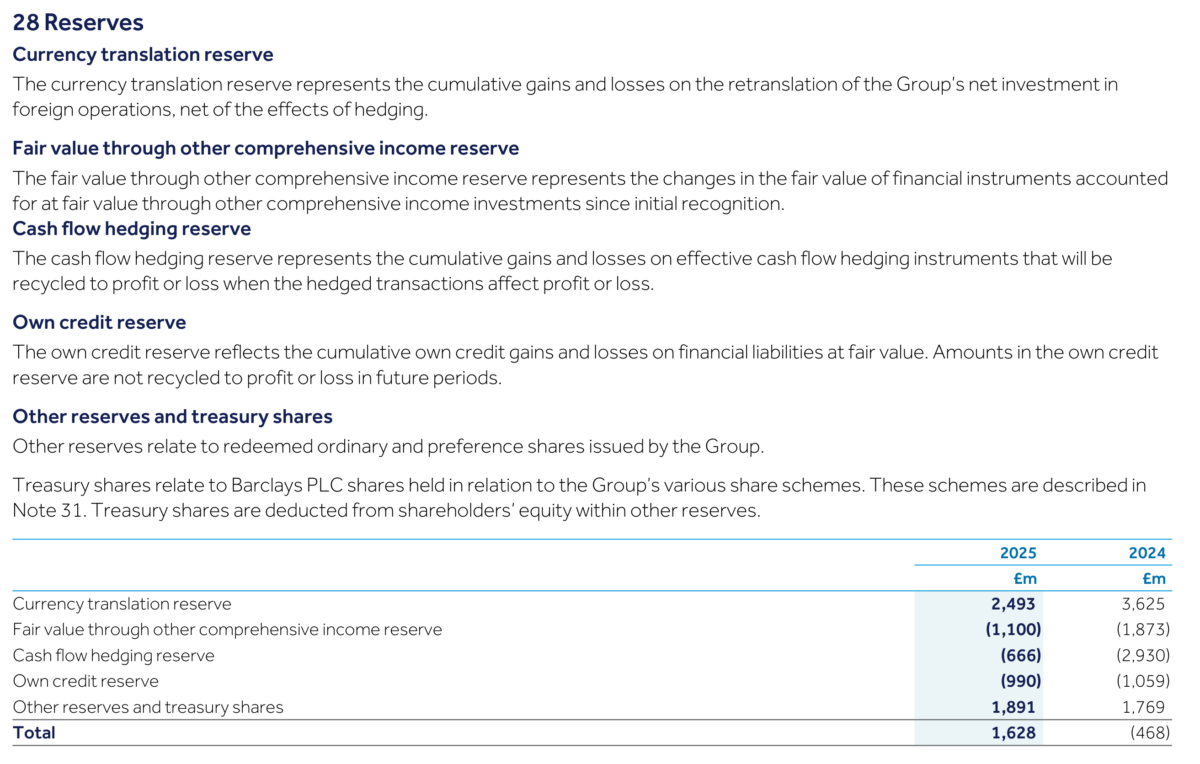
Furthermore, IFRS 18.130(b) requires disclosure of a description of the nature and purpose of each reserve within equity, which, again, many entities fail to provide. Below is an example of this disclosure from Barclays:
Finally, IFRS 18.132 requires disclosure of the amount of dividends proposed or declared before the financial statements were authorised for issue, and the amount of any cumulative preference dividends not recognised.
More about IFRS 18
See other pages relating to IFRS 18:
Overview of IFRS 18Statement of Profit or Loss
Categories in the Statement of Profit or Loss
Specified Main Business Activities
Presentation and Disclosure of Operating Expenses
Cost of Sales
Other Comprehensive Income
Statement of Financial Position
Classification of Assets and Liabilities as Current and Non-current
Statement of Changes in Equity
Consistency of Presentation, Disclosure and Classification
Aggregation and Disaggregation in Financial Statements
Offsetting in Financial Statements
Transactions with Owners in Their Capacity as Owners
Identification of Management-Defined Performance Measures
Presentation and Disclosure of Management-Defined Performance Measures
Transition from IAS 1